

Costa Rica
Hummingbirds, Volcanoes,
Herptiles, Birds and more!
Photo Tour and Photoshop Workshop
January 2013
Limited to SIX Photographers!
and
THREE hummingbird electronic flash setups.
Three Diverse Locations with
plenty of time at each!
Costa Rica is internationally famous for its conservation ethic, its wildlife, and its hummingbirds. A country of natural history diversity, with frontage on both the Atlantic and Pacific, lowland jungle, cloud forest, and a series of volcanoes, Costa Rica's wildlife is diverse.
A small but prosperous and stable country, Costa Rica is, nonetheless, too diverse for a photo tour of reasonable length to do more than 'cherry pick' the best locations possible. And that's exactly what we did for this exciting photo tour.
Trip Highlights
This is an incredibly diverse trip, with in-depth emphasis upon birds, landscapes, hummingbirds, and reptiles, mammals, and macro subjects. Well be spending time at three very diverse locations, including a lodge in the northeast, near the Nicarauga border where we'll have tropical forest birds, reptiles, and mammals. Here we'll photograph, at eye-level, two species of toucan, aracaris, and many other bird species. On the jungle trails we'll have the unusual leaf-cutter ants, various other macro subjects, and cryptic reptiles, birds, and mammals.
We'll spend three nights, and two days, at one of Costa Rica's most active volcanoes, Arenal, where we'll be staying at the Arenal Observatory Lodge, offering unparalleled viewpoints, at close range, of the volcano both day and night. Our rooms will be located on the volcano side of the complex, allowing us the opportunity to photograph the volcano throughout the night. More on this later!
Photo: Greg Basco
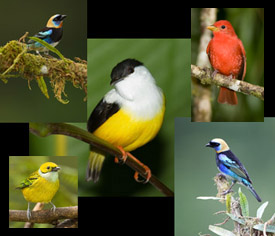 While at Arenal we'll spend much of a day at a reptile/herptile park where we'll photograph the collection of the owner in natural setups, both indoors and out. We'll be shooting a variety of snakes, treefrogs, lizards, and other subjects with both flash and natural light.
We'll be utilizing two or three different locations for hummingbird photography, depending upon the weather. If possible, this year we'll be photographing hummingbirds at the Arenal volcano area, where we'll have several species we would not find elsewhere. Arenal can be rainy, so our shooting may be compromised, or impossible, but we're hoping to have one or two sets up for shooting. Costa Rica has dozens of hummingbird species and by shooting at two locations we'll maximize our opportunities for filming several different species, as well as the bird life found at these locations.
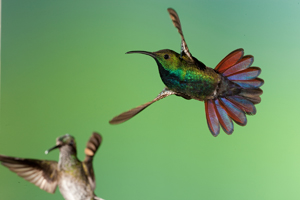 We'll be photographing hummingbirds via two methods -- while using the flash setups we are providing, so you won't need to carry your own setups. When possible, we'll photograph our hummingbird subjects as they visit flowers we'll have baited with sugar water. This provides some wonderful images, but it can also be a bit tedious, and, before birds get accustomed to a new feeding location, a bit costly for time. We'll also be shooting birds as they visit traditional feeders, where we won't worry whether or not a feeder shows in the image.
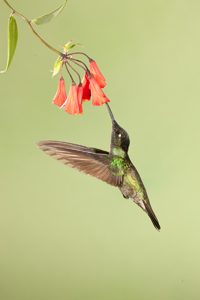
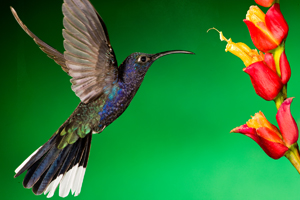
That's the exciting aspect of this tour, as we'll be doing a mini-Photoshop workshop on how you can composite images to maximize our shooting. While all of us would love to be able to shoot every hummingbird at a natural flower, time, cooperation, and opportunity precludes that wish every time. Via Photoshop, however, we can maximize our shooting opportunities!
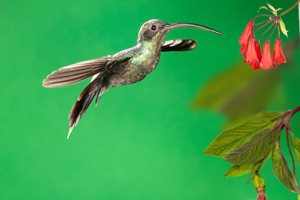
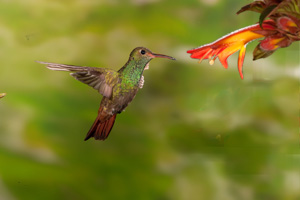
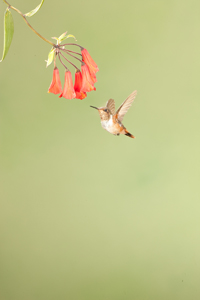
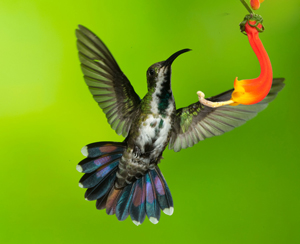
Some of these images are composites, and some are straight shots. Can you tell which?

Our Itinerary
Brochure UNDER CONSTRUCTION, SO THE DAILYITINERARY BELOW IS A ROUGH REFERENCE ONLY.
Day 1
Arrive in San Jose, Costa Rica and transfer to the Hotel Bouganvillea.
This hotel, located near the outskirts of the city, is beautifully landscaped and provides wonderful opportunities for macro photography, of insects, flowers, plants, and some telephoto work of the birds frequenting the garden.
 On our hotel grounds outside San Jose the gardens provide a wealth of photographic subjects. Chief amongst these are the blue-crowned mot-mots that quietly perch, waiting to ambush insects and small frogs. The mot-mots are easy to photograph once they are spotted, but they sit quietly and can be missed!
Day 2
We'll head north to our first destination, a wonderful lodge on the edge of the Tropical forest. The bird shooting is great throughout the day, especially at the feeders where we'll photograph at birds' level from an elevated, very comfortable porch. From this vantage we'll shoot at least 10 different species, including two toucans, one aracari, and a variety of tanagers.
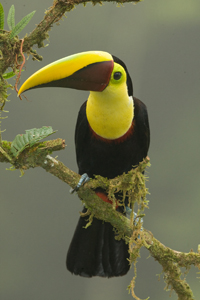
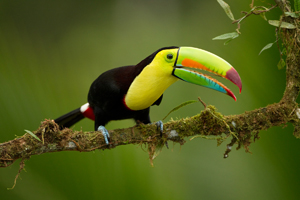
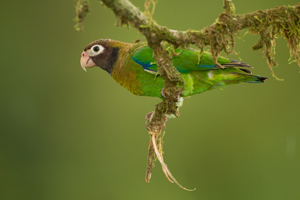
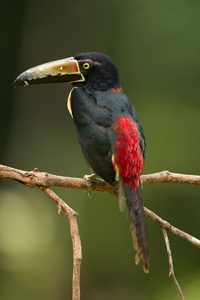
Chestnut-mandibled toucan, Keel-billed toucan, brown-hooded parrot, and Collared Aracaris are easy to shoot from our porch perch!
Day 3
We'll have another day to photograph at the lodge, on the jungle trails, and at a garden where a variety of songbirds less common at the lodge can be found.
 Day 4 and Day 5, 6
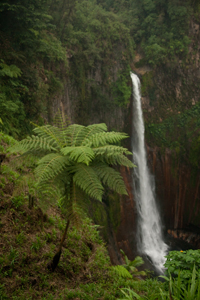
We'll head south for our next destination, where we'll be photographing hummingbirds at our lodge and at a location nearby where we'll have the chance for bird and spectacular water fall and landscape photography, too.
At the lodge we'll be concentrating on our hummingbird flash photography and the birds and mammals at the feeders here. We'll also do one morning field trip to the Bull River waterfalls for natural light hummingbird, flower, and, of course, landscape photography.
At our second destination we'll be photographing hummingbirds at two locations. At one, we'll have the opportunity to shoot a spectacular upland waterfall and jungle vegetation, as well as the birds around the grounds.
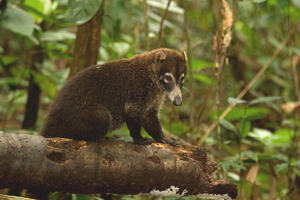
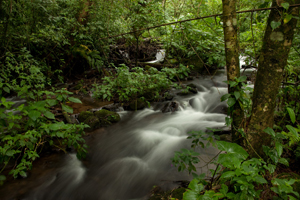

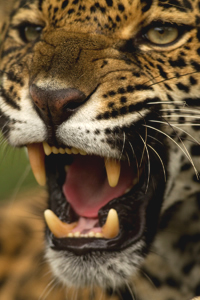
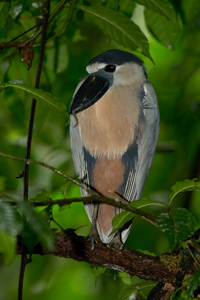
Coatimundi, jungle landscapes, scarlet macaws, a captive jaguar, and a boat-billed heron rookery, all subjects we should shoot in the first few days of this tour!
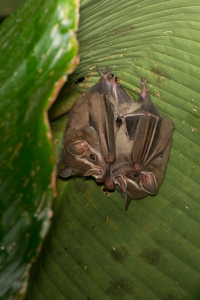
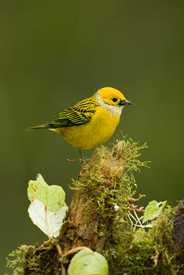
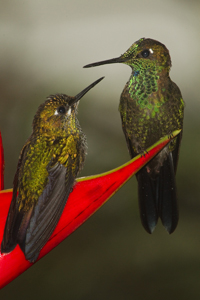
Below, tent-making bat, silver-throated tanager, and green-crowned brilliant.
Bosque de Paz has a great feeder for song birds and for mammals, and we'll have a good chance for shooting coatis, a rangy raccoon-like mammal, and two antelope-like rodents, agoutis and pacas. We'll be setting up our hummingbird sets shortly after arriving and we'll be starting our hummingbird rotation by late afternoon.
We have the potential to see and photograph the following birds here:
Hummingbirds: violet sabrewing, green-crowned brilliant, purple-throated mountain gem, black-bellied hummingbird, coppery-headed emerald, green thorntail, green hermit, and rufous-tailed.
Off of our hummer stups we may have:
scintillant and volcano hummingbirds, black guan, rufous motmot, chestnut-capped brush finch, paca, agouti, and coatimundi.
Day 7
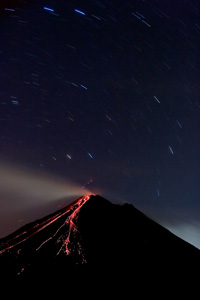 Drive to Arenal Observatory. En route we'll stop for any roadside wildlife we may see, which may include tree iguanas, three-toed sloths, and other subjects. At Arenal we'll be a bit flexible, depending upon the weather. If the sky is clear and the volcano is performing we'll shoot scenics, or we'll work with birds and mammals at the feeders around Arenal.
Volcano Photo: Greg Basco
We'll also do a presentation on photographing the volcano at night, which we'll undoubtedly be doing if the weather is clear. Sometimes the volcano is shrouded by clouds but some time during the night the skies often clear, and it is prudent to check throughout the night for shooting opportunities. Having our rooms facing the volcano will make our night shooting easy, and rewarding!
We are spending three nights at the Arenal volcano because, quite frankly, the weather can be terrible. On our first tour, last year, we never saw the volcano! One night, we were awakened from a sound sleep by a deep rumble and blast, and in the mist we could see the volcano, all bright and glowing from a tremendous eruption. Before we could even get out of bed, however, the mist closed in and the glow vanished, and that was our only 'good' view in the two days we spent here.
If we have great weather, so much the better, for this will give us three nights to try different shutter speeds, different framing, etc., and at the worse, in three days we should, hopefully, have some luck!
 Day 8 - 9
If the subjects are alluring, we'll spend a portion of the morning at the Arenal feeders, or checking out a location for a Geofrey's cat, a very rare spotted feline that has been rehabed back into the wild. We'll head to Bosque de Paz next, and we'll stop at a location for tree iguanas and for boat-billed herons, a unique nocturnal heron that resembles a black-crowned night heron with a huge bill.
On at least one morning we'll start the day at the Arenal feeders where we'll be shooting a variety of birds and a few mammals that often visit the feeders. These species include ...
In mid-morning we'll head to our reptile park where we'll be photographing a variety of herptiles - reptiles and amphibians - in a studio setting. We'll be using flash and setting up natural backgrounds and props, similar to what we do at our Hoot Hollow Reptiles of the World Photo Shoots. While it's too early to state exactly what we'll be shooting, our subject list should include eyelash vipers and other arboreal vipers, bushmasters and fer-de-lance vipers, various arboreal treefrogs and dart frogs, and some lizards. If we have time, we'll work on the tarantula collection, too!
The wildlife and birds we may see and photograph at Arenal include:
violet-headed hummingbird, Montezuma oropendola, crested guan, emerald tanager, golden-hooded tanager, blue-gray tanager, collared aracari, red-legged honeycreeper, howler monkey, and oncilla.
At our reptile/herptile stop the subjects vary from year to year, but we can expect species like the following:
neotropical rattlesnake, cantil, bushmaster, jumping pit viper, hog-nosed pit viper, eyelash vipers (various color morphs including yellow), neotropical bird snake, green vine snake, brown vine snake, short-nosed vine snake, satiny parrot snake, tarantula, strawberry poison frog, green and black poison frog, red-eyed tree frog
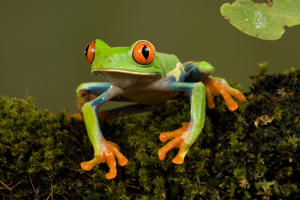
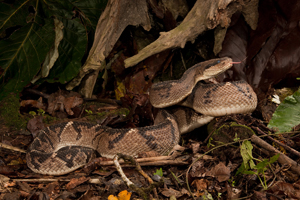
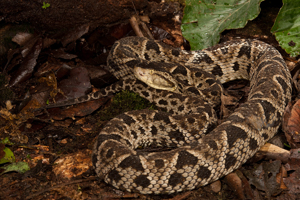
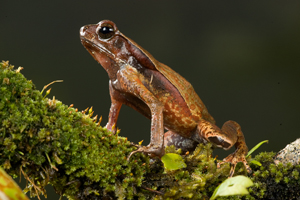
Red-eyed treefrog, bushmaster, fer-de-lance, and forest toad.
Dau 10
We'll have a final morning at Arenal before heading south for our return to San Jose. You'll have time in the afternoon to photograph the birds at the hotel garden, or simply relax, pack, or even swim at their great pool. Overnight in San Jose.
Day 11. Transfer to the International Airport for your flight home.
My Objective
 You should return with the best photographs of Costa Rica wildlife possible in the time frame we have available. This doesn't come easily; it requires early starts, patience, and a degree of luck. We'll be supplying the flash equipment so you can expect gear that works and that is suited for the job at hand for photographing the hummingbirds.
With our co-leader Greg Basco we're confident that we'll be able to provide you with the most complete tour possible, as well as vital Photoshop information and techniques that you can use later with your work.
What's Included
The photo tour for our Costa Rica Photo Tour is $TBA (six participants) and $TBA (five participants) based on land costs from San Jose, Costa Rica and includes all accommodations (double occupancy) as specified above, all meals as specified except day one, entrance fees, and ground transportation in our spacious, air-conditioned tour bus. Also included, professional bilingual photo/nature/culture guide, photo guide assistance with workshops and informal learning, assistance with caption and identification information, taxes for all services included and listed, and biodegradable water bottle for each participant. A single rooming supplement is available at an additional cos of $TBA.
 The tour price includes all meals, a welcome and farewell drink, and the driver/guide's tip. There will be three electronic flash setups (weather permitting), and participants will be rotated in a fair and equal basis through these setups.
Gratuities for hotel or lodge staff, airport transfere, and laundry fees or lodging that takes place before or after the photo tour and those meals are not included. Also not included is Airfare to Costa Rica, the Airport departure tax (US $26), alchoholic drinks (excepting our welcome and farewell receptions), non-meal time snacks, non-meal time soft drinks and bottled water, and souvenirs.
We always recommend trip insurance. Check our link.
Our Roles as Leaders, and Your Role
Mary and I know wildlife, and how to photograph it. I want everyone to obtain great photographs, and to enjoy himself or herself while doing so. Great photography requires patience, luck, and time, and you can trust us that everything we do as your trip leaders will have those priorities - your photos and well-being as an individual in our group -- in mind.
Don't expect me to compromise the group for you, whether that's for tardiness, forgetfulness, or otherwise. We won't. We're up front about our time, tenacity and seriousness, and we want our people to know this. If you join us, that's what you're getting into. I think some people join a group and expect it to conform to their individual demands. We won't do that. If you like to travel privately, or to 'run the show,' or to make selfish demands, we'd suggest you go alone.
At the snake park we will be photographing potentially letal reptiles, and safety, and following specific instructions, will be paramount and mandatory. Photographers and participants involved in this activity must follow our instructions and directions, and if these are not followed, or if someone acts carelessly or foolishly, they will be ordered to leave the reptile shoot immediately, no questions asked. This hardlining is for your safety, and for the welfare and success of the entire group, as well as for insuring your personal safety.
Foreign travel is exciting, but it can be exhausting for some. You very well may need to sit out a hummingbird session or feeder shoot and relax one day, and if you feel this way, please do so. We press fairly hard, but we do so because we know that many in the group have high-energy reserves, limited budgets, and inexhaustible enthusiasm, and these folks want as much out of the experience as they can get. We aim to deliver that.
About Your Leaders
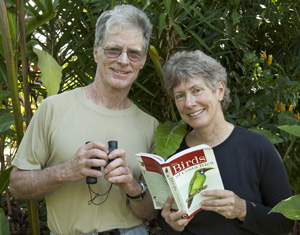 My wife Mary Ann and I strive to provide the most comfortable and thorough safari you will experience. Both Mary and I are photographers, and I'd hope you've seen our credits. These included Audubon, National Geographic, National Wildlife, Ranger Rick, Natural History, Living Bird, Birder's World, Wildlife Conservation, and most nature/wildlife calendars.
In 1994 Mary Ann won two first place awards in the prestigious BBC Wildlife Photographer of the Year competition, in Endangered Species and in Bird Behavior. In 1998 she had three highly commended images published in the BBC competition, ALL THREE from Kenya! She won first place in the Cemex/Nature's Best photo contest in the Humor Division for Professional Photographers. In 2003 she won first place in Mammal Behavior in the Agfa All Africa photo competition with a dust bathing bull elephant from Samburu. Mary has written a number of children's books, including Leopards, Grizzly Bears, Woodpeckers, Flying Squirrels, Sunflowers, Cobras, Jupiter, Boas, Garter Snakes, Pythons, Rattlesnakes, Ducks, Chickens, Horses, and Cows, and a coffee table book, Out of the Past, Amish Tradition and Faith.
I've written several how-to wildlife photography books -- A Practical Guide to Photographing American Wildlife, The Wildlife Photographer's Field Manual, The Complete Guide to Wildlife Photography, Designing Wildlife Photographs, Photographing on Safari, A Field Guide to Photographing in East Africa, and The New Complete Guide to Wildlife Photography. In 1999 Todtri published African Wildlife, and in 1999 we produced our first instructional video, A Video Guide to Photographing on Safari with Joe and Mary Ann McDonald. The video has received rave reviews, and it is the definitive guide for preparing yourself for a safari. I've won several times for highly commended images in both the Cemex/Nature's Best and the Agfa all Africa photo competitions. In 2003 I won 2nd place in the World in Our Hands category in the BBC competition with an image from Africa.
Mary and I were featured in the book, the World's Best Wildlife Photographers, and we write regularly appearing columns in Outdoor Photographer magazine and in several web magazines. Our latest book, Digital Nature Photography, From Capture to Output, is a PDF file that covers EVERYTHING you need to know about digital nature photography, including workflow, file management, RAW conversion, and maximizing the digital image. It is available directly through our office.
P
Greg Basco,
co-founder of Foto Verde Tours, will be our in-country guide. Greg worked as a Peace Corps volunteer after finishing his undergraduate work, and after grad school returned to Costa Rica. His interest in Natural History eventually led to the founding of Foto Verde Tours, the first and only travel company dedicated to nature photography, and sharing his interest and knowledge of wildlife and Costa Rica with his clients. Greg is a great photographer -- his work, in my opinion, is as fine as anything I've seen from Costa Rica and he truly must be considered one of the top photographers in that country. His credits include National Geographic, Lonely Planet, Sierra Club, Newsweek, and more. His images have also been used by Canon USA and Canon Europe. Greg is also a great leader and extremely attentive to his groups, and he's been living, working, and dedicating his life to Costa Rica conservation, photography, and tourism, for nearly two decades. Greg is working on a coffee-table book on costa rica and will have a gallery exhibit at the Missouri Botanical Gardens in 2010.
In 2009, when I did my scouting trip to check out the shooting opportunities, I was also checking out Greg, to be sure we could work together and offer a great tour. I was completely impressed, and you will be too!
Contact us by e-mail:info@hoothollow.com
Or FAX us at: (717) 543-6423.
Return to HomePage
Costa Rica
Hummingbirds, Volcanoes,
Herptiles, Birds and more!
Photo Tour and Photoshop Workshop
January 2013
Limited to SIX Photographers!
and
THREE hummingbird electronic flash setups.
Three Diverse Locations with
plenty of time at each!
Costa Rica is internationally famous for its conservation ethic, its wildlife, and its hummingbirds. A country of natural history diversity, with frontage on both the Atlantic and Pacific, lowland jungle, cloud forest, and a series of volcanoes, Costa Rica's wildlife is diverse.
A small but prosperous and stable country, Costa Rica is, nonetheless, too diverse for a photo tour of reasonable length to do more than 'cherry pick' the best locations possible. And that's exactly what we did for this exciting photo tour.
Trip Highlights
This is an incredibly diverse trip, with in-depth emphasis upon birds, landscapes, hummingbirds, and reptiles, mammals, and macro subjects. Well be spending time at three very diverse locations, including a lodge in the northeast, near the Nicarauga border where we'll have tropical forest birds, reptiles, and mammals. Here we'll photograph, at eye-level, two species of toucan, aracaris, and many other bird species. On the jungle trails we'll have the unusual leaf-cutter ants, various other macro subjects, and cryptic reptiles, birds, and mammals.
We'll spend three nights, and two days, at one of Costa Rica's most active volcanoes, Arenal, where we'll be staying at the Arenal Observatory Lodge, offering unparalleled viewpoints, at close range, of the volcano both day and night. Our rooms will be located on the volcano side of the complex, allowing us the opportunity to photograph the volcano throughout the night. More on this later!
Photo: Greg Basco
While at Arenal we'll spend much of a day at a reptile/herptile park where we'll photograph the collection of the owner in natural setups, both indoors and out. We'll be shooting a variety of snakes, treefrogs, lizards, and other subjects with both flash and natural light.
We'll be utilizing two or three different locations for hummingbird photography, depending upon the weather. If possible, this year we'll be photographing hummingbirds at the Arenal volcano area, where we'll have several species we would not find elsewhere. Arenal can be rainy, so our shooting may be compromised, or impossible, but we're hoping to have one or two sets up for shooting. Costa Rica has dozens of hummingbird species and by shooting at two locations we'll maximize our opportunities for filming several different species, as well as the bird life found at these locations.
We'll be photographing hummingbirds via two methods -- while using the flash setups we are providing, so you won't need to carry your own setups. When possible, we'll photograph our hummingbird subjects as they visit flowers we'll have baited with sugar water. This provides some wonderful images, but it can also be a bit tedious, and, before birds get accustomed to a new feeding location, a bit costly for time. We'll also be shooting birds as they visit traditional feeders, where we won't worry whether or not a feeder shows in the image.
That's the exciting aspect of this tour, as we'll be doing a mini-Photoshop workshop on how you can composite images to maximize our shooting. While all of us would love to be able to shoot every hummingbird at a natural flower, time, cooperation, and opportunity precludes that wish every time. Via Photoshop, however, we can maximize our shooting opportunities!
Some of these images are composites, and some are straight shots. Can you tell which?
Our Itinerary
Brochure UNDER CONSTRUCTION, SO THE DAILYITINERARY BELOW IS A ROUGH REFERENCE ONLY.
Day 1
Arrive in San Jose, Costa Rica and transfer to the Hotel Bouganvillea.
This hotel, located near the outskirts of the city, is beautifully landscaped and provides wonderful opportunities for macro photography, of insects, flowers, plants, and some telephoto work of the birds frequenting the garden.
On our hotel grounds outside San Jose the gardens provide a wealth of photographic subjects. Chief amongst these are the blue-crowned mot-mots that quietly perch, waiting to ambush insects and small frogs. The mot-mots are easy to photograph once they are spotted, but they sit quietly and can be missed!
Day 2
We'll head north to our first destination, a wonderful lodge on the edge of the Tropical forest. The bird shooting is great throughout the day, especially at the feeders where we'll photograph at birds' level from an elevated, very comfortable porch. From this vantage we'll shoot at least 10 different species, including two toucans, one aracari, and a variety of tanagers.
Chestnut-mandibled toucan, Keel-billed toucan, brown-hooded parrot, and Collared Aracaris are easy to shoot from our porch perch!
Day 3
We'll have another day to photograph at the lodge, on the jungle trails, and at a garden where a variety of songbirds less common at the lodge can be found.
Day 4 and Day 5, 6
We'll head south for our next destination, where we'll be photographing hummingbirds at our lodge and at a location nearby where we'll have the chance for bird and spectacular water fall and landscape photography, too.
At the lodge we'll be concentrating on our hummingbird flash photography and the birds and mammals at the feeders here. We'll also do one morning field trip to the Bull River waterfalls for natural light hummingbird, flower, and, of course, landscape photography.
At our second destination we'll be photographing hummingbirds at two locations. At one, we'll have the opportunity to shoot a spectacular upland waterfall and jungle vegetation, as well as the birds around the grounds.
Coatimundi, jungle landscapes, scarlet macaws, a captive jaguar, and a boat-billed heron rookery, all subjects we should shoot in the first few days of this tour!
Below, tent-making bat, silver-throated tanager, and green-crowned brilliant.
Bosque de Paz has a great feeder for song birds and for mammals, and we'll have a good chance for shooting coatis, a rangy raccoon-like mammal, and two antelope-like rodents, agoutis and pacas. We'll be setting up our hummingbird sets shortly after arriving and we'll be starting our hummingbird rotation by late afternoon.
We have the potential to see and photograph the following birds here:
Hummingbirds: violet sabrewing, green-crowned brilliant, purple-throated mountain gem, black-bellied hummingbird, coppery-headed emerald, green thorntail, green hermit, and rufous-tailed.
Off of our hummer stups we may have:
scintillant and volcano hummingbirds, black guan, rufous motmot, chestnut-capped brush finch, paca, agouti, and coatimundi.
Day 7
Drive to Arenal Observatory. En route we'll stop for any roadside wildlife we may see, which may include tree iguanas, three-toed sloths, and other subjects. At Arenal we'll be a bit flexible, depending upon the weather. If the sky is clear and the volcano is performing we'll shoot scenics, or we'll work with birds and mammals at the feeders around Arenal.
Volcano Photo: Greg Basco
We'll also do a presentation on photographing the volcano at night, which we'll undoubtedly be doing if the weather is clear. Sometimes the volcano is shrouded by clouds but some time during the night the skies often clear, and it is prudent to check throughout the night for shooting opportunities. Having our rooms facing the volcano will make our night shooting easy, and rewarding!
We are spending three nights at the Arenal volcano because, quite frankly, the weather can be terrible. On our first tour, last year, we never saw the volcano! One night, we were awakened from a sound sleep by a deep rumble and blast, and in the mist we could see the volcano, all bright and glowing from a tremendous eruption. Before we could even get out of bed, however, the mist closed in and the glow vanished, and that was our only 'good' view in the two days we spent here.
If we have great weather, so much the better, for this will give us three nights to try different shutter speeds, different framing, etc., and at the worse, in three days we should, hopefully, have some luck!
Day 8 - 9
If the subjects are alluring, we'll spend a portion of the morning at the Arenal feeders, or checking out a location for a Geofrey's cat, a very rare spotted feline that has been rehabed back into the wild. We'll head to Bosque de Paz next, and we'll stop at a location for tree iguanas and for boat-billed herons, a unique nocturnal heron that resembles a black-crowned night heron with a huge bill.
On at least one morning we'll start the day at the Arenal feeders where we'll be shooting a variety of birds and a few mammals that often visit the feeders. These species include ...
In mid-morning we'll head to our reptile park where we'll be photographing a variety of herptiles - reptiles and amphibians - in a studio setting. We'll be using flash and setting up natural backgrounds and props, similar to what we do at our Hoot Hollow Reptiles of the World Photo Shoots. While it's too early to state exactly what we'll be shooting, our subject list should include eyelash vipers and other arboreal vipers, bushmasters and fer-de-lance vipers, various arboreal treefrogs and dart frogs, and some lizards. If we have time, we'll work on the tarantula collection, too!
The wildlife and birds we may see and photograph at Arenal include:
violet-headed hummingbird, Montezuma oropendola, crested guan, emerald tanager, golden-hooded tanager, blue-gray tanager, collared aracari, red-legged honeycreeper, howler monkey, and oncilla.
At our reptile/herptile stop the subjects vary from year to year, but we can expect species like the following:
neotropical rattlesnake, cantil, bushmaster, jumping pit viper, hog-nosed pit viper, eyelash vipers (various color morphs including yellow), neotropical bird snake, green vine snake, brown vine snake, short-nosed vine snake, satiny parrot snake, tarantula, strawberry poison frog, green and black poison frog, red-eyed tree frog
Red-eyed treefrog, bushmaster, fer-de-lance, and forest toad.
Dau 10
We'll have a final morning at Arenal before heading south for our return to San Jose. You'll have time in the afternoon to photograph the birds at the hotel garden, or simply relax, pack, or even swim at their great pool. Overnight in San Jose.
Day 11. Transfer to the International Airport for your flight home.
My Objective
You should return with the best photographs of Costa Rica wildlife possible in the time frame we have available. This doesn't come easily; it requires early starts, patience, and a degree of luck. We'll be supplying the flash equipment so you can expect gear that works and that is suited for the job at hand for photographing the hummingbirds.
With our co-leader Greg Basco we're confident that we'll be able to provide you with the most complete tour possible, as well as vital Photoshop information and techniques that you can use later with your work.
What's Included
The photo tour for our Costa Rica Photo Tour is $TBA (six participants) and $TBA (five participants) based on land costs from San Jose, Costa Rica and includes all accommodations (double occupancy) as specified above, all meals as specified except day one, entrance fees, and ground transportation in our spacious, air-conditioned tour bus. Also included, professional bilingual photo/nature/culture guide, photo guide assistance with workshops and informal learning, assistance with caption and identification information, taxes for all services included and listed, and biodegradable water bottle for each participant. A single rooming supplement is available at an additional cos of $TBA.
The tour price includes all meals, a welcome and farewell drink, and the driver/guide's tip. There will be three electronic flash setups (weather permitting), and participants will be rotated in a fair and equal basis through these setups.
Gratuities for hotel or lodge staff, airport transfere, and laundry fees or lodging that takes place before or after the photo tour and those meals are not included. Also not included is Airfare to Costa Rica, the Airport departure tax (US $26), alchoholic drinks (excepting our welcome and farewell receptions), non-meal time snacks, non-meal time soft drinks and bottled water, and souvenirs.
We always recommend trip insurance. Check our link.
Our Roles as Leaders, and Your Role
Mary and I know wildlife, and how to photograph it. I want everyone to obtain great photographs, and to enjoy himself or herself while doing so. Great photography requires patience, luck, and time, and you can trust us that everything we do as your trip leaders will have those priorities - your photos and well-being as an individual in our group -- in mind.
Don't expect me to compromise the group for you, whether that's for tardiness, forgetfulness, or otherwise. We won't. We're up front about our time, tenacity and seriousness, and we want our people to know this. If you join us, that's what you're getting into. I think some people join a group and expect it to conform to their individual demands. We won't do that. If you like to travel privately, or to 'run the show,' or to make selfish demands, we'd suggest you go alone.
At the snake park we will be photographing potentially letal reptiles, and safety, and following specific instructions, will be paramount and mandatory. Photographers and participants involved in this activity must follow our instructions and directions, and if these are not followed, or if someone acts carelessly or foolishly, they will be ordered to leave the reptile shoot immediately, no questions asked. This hardlining is for your safety, and for the welfare and success of the entire group, as well as for insuring your personal safety.
Foreign travel is exciting, but it can be exhausting for some. You very well may need to sit out a hummingbird session or feeder shoot and relax one day, and if you feel this way, please do so. We press fairly hard, but we do so because we know that many in the group have high-energy reserves, limited budgets, and inexhaustible enthusiasm, and these folks want as much out of the experience as they can get. We aim to deliver that.
About Your Leaders
My wife Mary Ann and I strive to provide the most comfortable and thorough safari you will experience. Both Mary and I are photographers, and I'd hope you've seen our credits. These included Audubon, National Geographic, National Wildlife, Ranger Rick, Natural History, Living Bird, Birder's World, Wildlife Conservation, and most nature/wildlife calendars.
In 1994 Mary Ann won two first place awards in the prestigious BBC Wildlife Photographer of the Year competition, in Endangered Species and in Bird Behavior. In 1998 she had three highly commended images published in the BBC competition, ALL THREE from Kenya! She won first place in the Cemex/Nature's Best photo contest in the Humor Division for Professional Photographers. In 2003 she won first place in Mammal Behavior in the Agfa All Africa photo competition with a dust bathing bull elephant from Samburu. Mary has written a number of children's books, including Leopards, Grizzly Bears, Woodpeckers, Flying Squirrels, Sunflowers, Cobras, Jupiter, Boas, Garter Snakes, Pythons, Rattlesnakes, Ducks, Chickens, Horses, and Cows, and a coffee table book, Out of the Past, Amish Tradition and Faith.
I've written several how-to wildlife photography books -- A Practical Guide to Photographing American Wildlife, The Wildlife Photographer's Field Manual, The Complete Guide to Wildlife Photography, Designing Wildlife Photographs, Photographing on Safari, A Field Guide to Photographing in East Africa, and The New Complete Guide to Wildlife Photography. In 1999 Todtri published African Wildlife, and in 1999 we produced our first instructional video, A Video Guide to Photographing on Safari with Joe and Mary Ann McDonald. The video has received rave reviews, and it is the definitive guide for preparing yourself for a safari. I've won several times for highly commended images in both the Cemex/Nature's Best and the Agfa all Africa photo competitions. In 2003 I won 2nd place in the World in Our Hands category in the BBC competition with an image from Africa.
Mary and I were featured in the book, the World's Best Wildlife Photographers, and we write regularly appearing columns in Outdoor Photographer magazine and in several web magazines. Our latest book, Digital Nature Photography, From Capture to Output, is a PDF file that covers EVERYTHING you need to know about digital nature photography, including workflow, file management, RAW conversion, and maximizing the digital image. It is available directly through our office.
P
Greg Basco,
co-founder of Foto Verde Tours, will be our in-country guide. Greg worked as a Peace Corps volunteer after finishing his undergraduate work, and after grad school returned to Costa Rica. His interest in Natural History eventually led to the founding of Foto Verde Tours, the first and only travel company dedicated to nature photography, and sharing his interest and knowledge of wildlife and Costa Rica with his clients. Greg is a great photographer -- his work, in my opinion, is as fine as anything I've seen from Costa Rica and he truly must be considered one of the top photographers in that country. His credits include National Geographic, Lonely Planet, Sierra Club, Newsweek, and more. His images have also been used by Canon USA and Canon Europe. Greg is also a great leader and extremely attentive to his groups, and he's been living, working, and dedicating his life to Costa Rica conservation, photography, and tourism, for nearly two decades. Greg is working on a coffee-table book on costa rica and will have a gallery exhibit at the Missouri Botanical Gardens in 2010.
In 2009, when I did my scouting trip to check out the shooting opportunities, I was also checking out Greg, to be sure we could work together and offer a great tour. I was completely impressed, and you will be too!
Contact us by e-mail:info@hoothollow.com
Or FAX us at: (717) 543-6423.
Return to HomePage
Costa Rica
Hummingbirds, Volcanoes,
Herptiles, Birds and more!
Photo Tour and Photoshop Workshop
January 2013
Limited to SIX Photographers!
and
THREE hummingbird electronic flash setups.
Three Diverse Locations with
plenty of time at each!
Costa Rica is internationally famous for its conservation ethic, its wildlife, and its hummingbirds. A country of natural history diversity, with frontage on both the Atlantic and Pacific, lowland jungle, cloud forest, and a series of volcanoes, Costa Rica's wildlife is diverse.
A small but prosperous and stable country, Costa Rica is, nonetheless, too diverse for a photo tour of reasonable length to do more than 'cherry pick' the best locations possible. And that's exactly what we did for this exciting photo tour.
Trip Highlights
This is an incredibly diverse trip, with in-depth emphasis upon birds, landscapes, hummingbirds, and reptiles, mammals, and macro subjects. Well be spending time at three very diverse locations, including a lodge in the northeast, near the Nicarauga border where we'll have tropical forest birds, reptiles, and mammals. Here we'll photograph, at eye-level, two species of toucan, aracaris, and many other bird species. On the jungle trails we'll have the unusual leaf-cutter ants, various other macro subjects, and cryptic reptiles, birds, and mammals.
We'll spend three nights, and two days, at one of Costa Rica's most active volcanoes, Arenal, where we'll be staying at the Arenal Observatory Lodge, offering unparalleled viewpoints, at close range, of the volcano both day and night. Our rooms will be located on the volcano side of the complex, allowing us the opportunity to photograph the volcano throughout the night. More on this later!
Photo: Greg Basco
While at Arenal we'll spend much of a day at a reptile/herptile park where we'll photograph the collection of the owner in natural setups, both indoors and out. We'll be shooting a variety of snakes, treefrogs, lizards, and other subjects with both flash and natural light.
We'll be utilizing two or three different locations for hummingbird photography, depending upon the weather. If possible, this year we'll be photographing hummingbirds at the Arenal volcano area, where we'll have several species we would not find elsewhere. Arenal can be rainy, so our shooting may be compromised, or impossible, but we're hoping to have one or two sets up for shooting. Costa Rica has dozens of hummingbird species and by shooting at two locations we'll maximize our opportunities for filming several different species, as well as the bird life found at these locations.
We'll be photographing hummingbirds via two methods -- while using the flash setups we are providing, so you won't need to carry your own setups. When possible, we'll photograph our hummingbird subjects as they visit flowers we'll have baited with sugar water. This provides some wonderful images, but it can also be a bit tedious, and, before birds get accustomed to a new feeding location, a bit costly for time. We'll also be shooting birds as they visit traditional feeders, where we won't worry whether or not a feeder shows in the image.
That's the exciting aspect of this tour, as we'll be doing a mini-Photoshop workshop on how you can composite images to maximize our shooting. While all of us would love to be able to shoot every hummingbird at a natural flower, time, cooperation, and opportunity precludes that wish every time. Via Photoshop, however, we can maximize our shooting opportunities!
Some of these images are composites, and some are straight shots. Can you tell which?
Our Itinerary
Brochure UNDER CONSTRUCTION, SO THE DAILYITINERARY BELOW IS A ROUGH REFERENCE ONLY.
Day 1
Arrive in San Jose, Costa Rica and transfer to the Hotel Bouganvillea.
This hotel, located near the outskirts of the city, is beautifully landscaped and provides wonderful opportunities for macro photography, of insects, flowers, plants, and some telephoto work of the birds frequenting the garden.
On our hotel grounds outside San Jose the gardens provide a wealth of photographic subjects. Chief amongst these are the blue-crowned mot-mots that quietly perch, waiting to ambush insects and small frogs. The mot-mots are easy to photograph once they are spotted, but they sit quietly and can be missed!
Day 2
We'll head north to our first destination, a wonderful lodge on the edge of the Tropical forest. The bird shooting is great throughout the day, especially at the feeders where we'll photograph at birds' level from an elevated, very comfortable porch. From this vantage we'll shoot at least 10 different species, including two toucans, one aracari, and a variety of tanagers.
Chestnut-mandibled toucan, Keel-billed toucan, brown-hooded parrot, and Collared Aracaris are easy to shoot from our porch perch!
Day 3
We'll have another day to photograph at the lodge, on the jungle trails, and at a garden where a variety of songbirds less common at the lodge can be found.
Day 4 and Day 5, 6
We'll head south for our next destination, where we'll be photographing hummingbirds at our lodge and at a location nearby where we'll have the chance for bird and spectacular water fall and landscape photography, too.
At the lodge we'll be concentrating on our hummingbird flash photography and the birds and mammals at the feeders here. We'll also do one morning field trip to the Bull River waterfalls for natural light hummingbird, flower, and, of course, landscape photography.
At our second destination we'll be photographing hummingbirds at two locations. At one, we'll have the opportunity to shoot a spectacular upland waterfall and jungle vegetation, as well as the birds around the grounds.
Coatimundi, jungle landscapes, scarlet macaws, a captive jaguar, and a boat-billed heron rookery, all subjects we should shoot in the first few days of this tour!
Below, tent-making bat, silver-throated tanager, and green-crowned brilliant.
Bosque de Paz has a great feeder for song birds and for mammals, and we'll have a good chance for shooting coatis, a rangy raccoon-like mammal, and two antelope-like rodents, agoutis and pacas. We'll be setting up our hummingbird sets shortly after arriving and we'll be starting our hummingbird rotation by late afternoon.
We have the potential to see and photograph the following birds here:
Hummingbirds: violet sabrewing, green-crowned brilliant, purple-throated mountain gem, black-bellied hummingbird, coppery-headed emerald, green thorntail, green hermit, and rufous-tailed.
Off of our hummer stups we may have:
scintillant and volcano hummingbirds, black guan, rufous motmot, chestnut-capped brush finch, paca, agouti, and coatimundi.
Day 7
Drive to Arenal Observatory. En route we'll stop for any roadside wildlife we may see, which may include tree iguanas, three-toed sloths, and other subjects. At Arenal we'll be a bit flexible, depending upon the weather. If the sky is clear and the volcano is performing we'll shoot scenics, or we'll work with birds and mammals at the feeders around Arenal.
Volcano Photo: Greg Basco
We'll also do a presentation on photographing the volcano at night, which we'll undoubtedly be doing if the weather is clear. Sometimes the volcano is shrouded by clouds but some time during the night the skies often clear, and it is prudent to check throughout the night for shooting opportunities. Having our rooms facing the volcano will make our night shooting easy, and rewarding!
We are spending three nights at the Arenal volcano because, quite frankly, the weather can be terrible. On our first tour, last year, we never saw the volcano! One night, we were awakened from a sound sleep by a deep rumble and blast, and in the mist we could see the volcano, all bright and glowing from a tremendous eruption. Before we could even get out of bed, however, the mist closed in and the glow vanished, and that was our only 'good' view in the two days we spent here.
If we have great weather, so much the better, for this will give us three nights to try different shutter speeds, different framing, etc., and at the worse, in three days we should, hopefully, have some luck!
Day 8 - 9
If the subjects are alluring, we'll spend a portion of the morning at the Arenal feeders, or checking out a location for a Geofrey's cat, a very rare spotted feline that has been rehabed back into the wild. We'll head to Bosque de Paz next, and we'll stop at a location for tree iguanas and for boat-billed herons, a unique nocturnal heron that resembles a black-crowned night heron with a huge bill.
On at least one morning we'll start the day at the Arenal feeders where we'll be shooting a variety of birds and a few mammals that often visit the feeders. These species include ...
In mid-morning we'll head to our reptile park where we'll be photographing a variety of herptiles - reptiles and amphibians - in a studio setting. We'll be using flash and setting up natural backgrounds and props, similar to what we do at our Hoot Hollow Reptiles of the World Photo Shoots. While it's too early to state exactly what we'll be shooting, our subject list should include eyelash vipers and other arboreal vipers, bushmasters and fer-de-lance vipers, various arboreal treefrogs and dart frogs, and some lizards. If we have time, we'll work on the tarantula collection, too!
The wildlife and birds we may see and photograph at Arenal include:
violet-headed hummingbird, Montezuma oropendola, crested guan, emerald tanager, golden-hooded tanager, blue-gray tanager, collared aracari, red-legged honeycreeper, howler monkey, and oncilla.
At our reptile/herptile stop the subjects vary from year to year, but we can expect species like the following:
neotropical rattlesnake, cantil, bushmaster, jumping pit viper, hog-nosed pit viper, eyelash vipers (various color morphs including yellow), neotropical bird snake, green vine snake, brown vine snake, short-nosed vine snake, satiny parrot snake, tarantula, strawberry poison frog, green and black poison frog, red-eyed tree frog
Red-eyed treefrog, bushmaster, fer-de-lance, and forest toad.
Dau 10
We'll have a final morning at Arenal before heading south for our return to San Jose. You'll have time in the afternoon to photograph the birds at the hotel garden, or simply relax, pack, or even swim at their great pool. Overnight in San Jose.
Day 11. Transfer to the International Airport for your flight home.
My Objective
You should return with the best photographs of Costa Rica wildlife possible in the time frame we have available. This doesn't come easily; it requires early starts, patience, and a degree of luck. We'll be supplying the flash equipment so you can expect gear that works and that is suited for the job at hand for photographing the hummingbirds.
With our co-leader Greg Basco we're confident that we'll be able to provide you with the most complete tour possible, as well as vital Photoshop information and techniques that you can use later with your work.
What's Included
The photo tour for our Costa Rica Photo Tour is $TBA (six participants) and $TBA (five participants) based on land costs from San Jose, Costa Rica and includes all accommodations (double occupancy) as specified above, all meals as specified except day one, entrance fees, and ground transportation in our spacious, air-conditioned tour bus. Also included, professional bilingual photo/nature/culture guide, photo guide assistance with workshops and informal learning, assistance with caption and identification information, taxes for all services included and listed, and biodegradable water bottle for each participant. A single rooming supplement is available at an additional cos of $TBA.
The tour price includes all meals, a welcome and farewell drink, and the driver/guide's tip. There will be three electronic flash setups (weather permitting), and participants will be rotated in a fair and equal basis through these setups.
Gratuities for hotel or lodge staff, airport transfere, and laundry fees or lodging that takes place before or after the photo tour and those meals are not included. Also not included is Airfare to Costa Rica, the Airport departure tax (US $26), alchoholic drinks (excepting our welcome and farewell receptions), non-meal time snacks, non-meal time soft drinks and bottled water, and souvenirs.
We always recommend trip insurance. Check our link.
Our Roles as Leaders, and Your Role
Mary and I know wildlife, and how to photograph it. I want everyone to obtain great photographs, and to enjoy himself or herself while doing so. Great photography requires patience, luck, and time, and you can trust us that everything we do as your trip leaders will have those priorities - your photos and well-being as an individual in our group -- in mind.
Don't expect me to compromise the group for you, whether that's for tardiness, forgetfulness, or otherwise. We won't. We're up front about our time, tenacity and seriousness, and we want our people to know this. If you join us, that's what you're getting into. I think some people join a group and expect it to conform to their individual demands. We won't do that. If you like to travel privately, or to 'run the show,' or to make selfish demands, we'd suggest you go alone.
At the snake park we will be photographing potentially letal reptiles, and safety, and following specific instructions, will be paramount and mandatory. Photographers and participants involved in this activity must follow our instructions and directions, and if these are not followed, or if someone acts carelessly or foolishly, they will be ordered to leave the reptile shoot immediately, no questions asked. This hardlining is for your safety, and for the welfare and success of the entire group, as well as for insuring your personal safety.
Foreign travel is exciting, but it can be exhausting for some. You very well may need to sit out a hummingbird session or feeder shoot and relax one day, and if you feel this way, please do so. We press fairly hard, but we do so because we know that many in the group have high-energy reserves, limited budgets, and inexhaustible enthusiasm, and these folks want as much out of the experience as they can get. We aim to deliver that.
About Your Leaders
My wife Mary Ann and I strive to provide the most comfortable and thorough safari you will experience. Both Mary and I are photographers, and I'd hope you've seen our credits. These included Audubon, National Geographic, National Wildlife, Ranger Rick, Natural History, Living Bird, Birder's World, Wildlife Conservation, and most nature/wildlife calendars.
In 1994 Mary Ann won two first place awards in the prestigious BBC Wildlife Photographer of the Year competition, in Endangered Species and in Bird Behavior. In 1998 she had three highly commended images published in the BBC competition, ALL THREE from Kenya! She won first place in the Cemex/Nature's Best photo contest in the Humor Division for Professional Photographers. In 2003 she won first place in Mammal Behavior in the Agfa All Africa photo competition with a dust bathing bull elephant from Samburu. Mary has written a number of children's books, including Leopards, Grizzly Bears, Woodpeckers, Flying Squirrels, Sunflowers, Cobras, Jupiter, Boas, Garter Snakes, Pythons, Rattlesnakes, Ducks, Chickens, Horses, and Cows, and a coffee table book, Out of the Past, Amish Tradition and Faith.
I've written several how-to wildlife photography books -- A Practical Guide to Photographing American Wildlife, The Wildlife Photographer's Field Manual, The Complete Guide to Wildlife Photography, Designing Wildlife Photographs, Photographing on Safari, A Field Guide to Photographing in East Africa, and The New Complete Guide to Wildlife Photography. In 1999 Todtri published African Wildlife, and in 1999 we produced our first instructional video, A Video Guide to Photographing on Safari with Joe and Mary Ann McDonald. The video has received rave reviews, and it is the definitive guide for preparing yourself for a safari. I've won several times for highly commended images in both the Cemex/Nature's Best and the Agfa all Africa photo competitions. In 2003 I won 2nd place in the World in Our Hands category in the BBC competition with an image from Africa.
Mary and I were featured in the book, the World's Best Wildlife Photographers, and we write regularly appearing columns in Outdoor Photographer magazine and in several web magazines. Our latest book, Digital Nature Photography, From Capture to Output, is a PDF file that covers EVERYTHING you need to know about digital nature photography, including workflow, file management, RAW conversion, and maximizing the digital image. It is available directly through our office.
P
Greg Basco,
co-founder of Foto Verde Tours, will be our in-country guide. Greg worked as a Peace Corps volunteer after finishing his undergraduate work, and after grad school returned to Costa Rica. His interest in Natural History eventually led to the founding of Foto Verde Tours, the first and only travel company dedicated to nature photography, and sharing his interest and knowledge of wildlife and Costa Rica with his clients. Greg is a great photographer -- his work, in my opinion, is as fine as anything I've seen from Costa Rica and he truly must be considered one of the top photographers in that country. His credits include National Geographic, Lonely Planet, Sierra Club, Newsweek, and more. His images have also been used by Canon USA and Canon Europe. Greg is also a great leader and extremely attentive to his groups, and he's been living, working, and dedicating his life to Costa Rica conservation, photography, and tourism, for nearly two decades. Greg is working on a coffee-table book on costa rica and will have a gallery exhibit at the Missouri Botanical Gardens in 2010.
In 2009, when I did my scouting trip to check out the shooting opportunities, I was also checking out Greg, to be sure we could work together and offer a great tour. I was completely impressed, and you will be too!
Contact us by e-mail:info@hoothollow.com
Or FAX us at: (717) 543-6423.
Return to HomePage
Costa Rica
Hummingbirds, Volcanoes,
Herptiles, Birds and more!
Photo Tour and Photoshop Workshop
January 2013
Limited to SIX Photographers!
and
THREE hummingbird electronic flash setups.
Three Diverse Locations with
plenty of time at each!
Costa Rica is internationally famous for its conservation ethic, its wildlife, and its hummingbirds. A country of natural history diversity, with frontage on both the Atlantic and Pacific, lowland jungle, cloud forest, and a series of volcanoes, Costa Rica's wildlife is diverse.
A small but prosperous and stable country, Costa Rica is, nonetheless, too diverse for a photo tour of reasonable length to do more than 'cherry pick' the best locations possible. And that's exactly what we did for this exciting photo tour.
Trip Highlights
This is an incredibly diverse trip, with in-depth emphasis upon birds, landscapes, hummingbirds, and reptiles, mammals, and macro subjects. Well be spending time at three very diverse locations, including a lodge in the northeast, near the Nicarauga border where we'll have tropical forest birds, reptiles, and mammals. Here we'll photograph, at eye-level, two species of toucan, aracaris, and many other bird species. On the jungle trails we'll have the unusual leaf-cutter ants, various other macro subjects, and cryptic reptiles, birds, and mammals.
We'll spend three nights, and two days, at one of Costa Rica's most active volcanoes, Arenal, where we'll be staying at the Arenal Observatory Lodge, offering unparalleled viewpoints, at close range, of the volcano both day and night. Our rooms will be located on the volcano side of the complex, allowing us the opportunity to photograph the volcano throughout the night. More on this later!
Photo: Greg Basco
While at Arenal we'll spend much of a day at a reptile/herptile park where we'll photograph the collection of the owner in natural setups, both indoors and out. We'll be shooting a variety of snakes, treefrogs, lizards, and other subjects with both flash and natural light.
We'll be utilizing two or three different locations for hummingbird photography, depending upon the weather. If possible, this year we'll be photographing hummingbirds at the Arenal volcano area, where we'll have several species we would not find elsewhere. Arenal can be rainy, so our shooting may be compromised, or impossible, but we're hoping to have one or two sets up for shooting. Costa Rica has dozens of hummingbird species and by shooting at two locations we'll maximize our opportunities for filming several different species, as well as the bird life found at these locations.
We'll be photographing hummingbirds via two methods -- while using the flash setups we are providing, so you won't need to carry your own setups. When possible, we'll photograph our hummingbird subjects as they visit flowers we'll have baited with sugar water. This provides some wonderful images, but it can also be a bit tedious, and, before birds get accustomed to a new feeding location, a bit costly for time. We'll also be shooting birds as they visit traditional feeders, where we won't worry whether or not a feeder shows in the image.
That's the exciting aspect of this tour, as we'll be doing a mini-Photoshop workshop on how you can composite images to maximize our shooting. While all of us would love to be able to shoot every hummingbird at a natural flower, time, cooperation, and opportunity precludes that wish every time. Via Photoshop, however, we can maximize our shooting opportunities!
Some of these images are composites, and some are straight shots. Can you tell which?
Our Itinerary
Brochure UNDER CONSTRUCTION, SO THE DAILYITINERARY BELOW IS A ROUGH REFERENCE ONLY.
Day 1
Arrive in San Jose, Costa Rica and transfer to the Hotel Bouganvillea.
This hotel, located near the outskirts of the city, is beautifully landscaped and provides wonderful opportunities for macro photography, of insects, flowers, plants, and some telephoto work of the birds frequenting the garden.
On our hotel grounds outside San Jose the gardens provide a wealth of photographic subjects. Chief amongst these are the blue-crowned mot-mots that quietly perch, waiting to ambush insects and small frogs. The mot-mots are easy to photograph once they are spotted, but they sit quietly and can be missed!
Day 2
We'll head north to our first destination, a wonderful lodge on the edge of the Tropical forest. The bird shooting is great throughout the day, especially at the feeders where we'll photograph at birds' level from an elevated, very comfortable porch. From this vantage we'll shoot at least 10 different species, including two toucans, one aracari, and a variety of tanagers.
Chestnut-mandibled toucan, Keel-billed toucan, brown-hooded parrot, and Collared Aracaris are easy to shoot from our porch perch!
Day 3
We'll have another day to photograph at the lodge, on the jungle trails, and at a garden where a variety of songbirds less common at the lodge can be found.
Day 4 and Day 5, 6
We'll head south for our next destination, where we'll be photographing hummingbirds at our lodge and at a location nearby where we'll have the chance for bird and spectacular water fall and landscape photography, too.
At the lodge we'll be concentrating on our hummingbird flash photography and the birds and mammals at the feeders here. We'll also do one morning field trip to the Bull River waterfalls for natural light hummingbird, flower, and, of course, landscape photography.
At our second destination we'll be photographing hummingbirds at two locations. At one, we'll have the opportunity to shoot a spectacular upland waterfall and jungle vegetation, as well as the birds around the grounds.
Coatimundi, jungle landscapes, scarlet macaws, a captive jaguar, and a boat-billed heron rookery, all subjects we should shoot in the first few days of this tour!
Below, tent-making bat, silver-throated tanager, and green-crowned brilliant.
Bosque de Paz has a great feeder for song birds and for mammals, and we'll have a good chance for shooting coatis, a rangy raccoon-like mammal, and two antelope-like rodents, agoutis and pacas. We'll be setting up our hummingbird sets shortly after arriving and we'll be starting our hummingbird rotation by late afternoon.
We have the potential to see and photograph the following birds here:
Hummingbirds: violet sabrewing, green-crowned brilliant, purple-throated mountain gem, black-bellied hummingbird, coppery-headed emerald, green thorntail, green hermit, and rufous-tailed.
Off of our hummer stups we may have:
scintillant and volcano hummingbirds, black guan, rufous motmot, chestnut-capped brush finch, paca, agouti, and coatimundi.
Day 7
Drive to Arenal Observatory. En route we'll stop for any roadside wildlife we may see, which may include tree iguanas, three-toed sloths, and other subjects. At Arenal we'll be a bit flexible, depending upon the weather. If the sky is clear and the volcano is performing we'll shoot scenics, or we'll work with birds and mammals at the feeders around Arenal.
Volcano Photo: Greg Basco
We'll also do a presentation on photographing the volcano at night, which we'll undoubtedly be doing if the weather is clear. Sometimes the volcano is shrouded by clouds but some time during the night the skies often clear, and it is prudent to check throughout the night for shooting opportunities. Having our rooms facing the volcano will make our night shooting easy, and rewarding!
We are spending three nights at the Arenal volcano because, quite frankly, the weather can be terrible. On our first tour, last year, we never saw the volcano! One night, we were awakened from a sound sleep by a deep rumble and blast, and in the mist we could see the volcano, all bright and glowing from a tremendous eruption. Before we could even get out of bed, however, the mist closed in and the glow vanished, and that was our only 'good' view in the two days we spent here.
If we have great weather, so much the better, for this will give us three nights to try different shutter speeds, different framing, etc., and at the worse, in three days we should, hopefully, have some luck!
Day 8 - 9
If the subjects are alluring, we'll spend a portion of the morning at the Arenal feeders, or checking out a location for a Geofrey's cat, a very rare spotted feline that has been rehabed back into the wild. We'll head to Bosque de Paz next, and we'll stop at a location for tree iguanas and for boat-billed herons, a unique nocturnal heron that resembles a black-crowned night heron with a huge bill.
On at least one morning we'll start the day at the Arenal feeders where we'll be shooting a variety of birds and a few mammals that often visit the feeders. These species include ...
In mid-morning we'll head to our reptile park where we'll be photographing a variety of herptiles - reptiles and amphibians - in a studio setting. We'll be using flash and setting up natural backgrounds and props, similar to what we do at our Hoot Hollow Reptiles of the World Photo Shoots. While it's too early to state exactly what we'll be shooting, our subject list should include eyelash vipers and other arboreal vipers, bushmasters and fer-de-lance vipers, various arboreal treefrogs and dart frogs, and some lizards. If we have time, we'll work on the tarantula collection, too!
The wildlife and birds we may see and photograph at Arenal include:
violet-headed hummingbird, Montezuma oropendola, crested guan, emerald tanager, golden-hooded tanager, blue-gray tanager, collared aracari, red-legged honeycreeper, howler monkey, and oncilla.
At our reptile/herptile stop the subjects vary from year to year, but we can expect species like the following:
neotropical rattlesnake, cantil, bushmaster, jumping pit viper, hog-nosed pit viper, eyelash vipers (various color morphs including yellow), neotropical bird snake, green vine snake, brown vine snake, short-nosed vine snake, satiny parrot snake, tarantula, strawberry poison frog, green and black poison frog, red-eyed tree frog
Red-eyed treefrog, bushmaster, fer-de-lance, and forest toad.
Dau 10
We'll have a final morning at Arenal before heading south for our return to San Jose. You'll have time in the afternoon to photograph the birds at the hotel garden, or simply relax, pack, or even swim at their great pool. Overnight in San Jose.
Day 11. Transfer to the International Airport for your flight home.
My Objective
You should return with the best photographs of Costa Rica wildlife possible in the time frame we have available. This doesn't come easily; it requires early starts, patience, and a degree of luck. We'll be supplying the flash equipment so you can expect gear that works and that is suited for the job at hand for photographing the hummingbirds.
With our co-leader Greg Basco we're confident that we'll be able to provide you with the most complete tour possible, as well as vital Photoshop information and techniques that you can use later with your work.
What's Included
The photo tour for our Costa Rica Photo Tour is $TBA (six participants) and $TBA (five participants) based on land costs from San Jose, Costa Rica and includes all accommodations (double occupancy) as specified above, all meals as specified except day one, entrance fees, and ground transportation in our spacious, air-conditioned tour bus. Also included, professional bilingual photo/nature/culture guide, photo guide assistance with workshops and informal learning, assistance with caption and identification information, taxes for all services included and listed, and biodegradable water bottle for each participant. A single rooming supplement is available at an additional cos of $TBA.
The tour price includes all meals, a welcome and farewell drink, and the driver/guide's tip. There will be three electronic flash setups (weather permitting), and participants will be rotated in a fair and equal basis through these setups.
Gratuities for hotel or lodge staff, airport transfere, and laundry fees or lodging that takes place before or after the photo tour and those meals are not included. Also not included is Airfare to Costa Rica, the Airport departure tax (US $26), alchoholic drinks (excepting our welcome and farewell receptions), non-meal time snacks, non-meal time soft drinks and bottled water, and souvenirs.
We always recommend trip insurance. Check our link.
Our Roles as Leaders, and Your Role
Mary and I know wildlife, and how to photograph it. I want everyone to obtain great photographs, and to enjoy himself or herself while doing so. Great photography requires patience, luck, and time, and you can trust us that everything we do as your trip leaders will have those priorities - your photos and well-being as an individual in our group -- in mind.
Don't expect me to compromise the group for you, whether that's for tardiness, forgetfulness, or otherwise. We won't. We're up front about our time, tenacity and seriousness, and we want our people to know this. If you join us, that's what you're getting into. I think some people join a group and expect it to conform to their individual demands. We won't do that. If you like to travel privately, or to 'run the show,' or to make selfish demands, we'd suggest you go alone.
At the snake park we will be photographing potentially letal reptiles, and safety, and following specific instructions, will be paramount and mandatory. Photographers and participants involved in this activity must follow our instructions and directions, and if these are not followed, or if someone acts carelessly or foolishly, they will be ordered to leave the reptile shoot immediately, no questions asked. This hardlining is for your safety, and for the welfare and success of the entire group, as well as for insuring your personal safety.
Foreign travel is exciting, but it can be exhausting for some. You very well may need to sit out a hummingbird session or feeder shoot and relax one day, and if you feel this way, please do so. We press fairly hard, but we do so because we know that many in the group have high-energy reserves, limited budgets, and inexhaustible enthusiasm, and these folks want as much out of the experience as they can get. We aim to deliver that.
About Your Leaders
My wife Mary Ann and I strive to provide the most comfortable and thorough safari you will experience. Both Mary and I are photographers, and I'd hope you've seen our credits. These included Audubon, National Geographic, National Wildlife, Ranger Rick, Natural History, Living Bird, Birder's World, Wildlife Conservation, and most nature/wildlife calendars.
In 1994 Mary Ann won two first place awards in the prestigious BBC Wildlife Photographer of the Year competition, in Endangered Species and in Bird Behavior. In 1998 she had three highly commended images published in the BBC competition, ALL THREE from Kenya! She won first place in the Cemex/Nature's Best photo contest in the Humor Division for Professional Photographers. In 2003 she won first place in Mammal Behavior in the Agfa All Africa photo competition with a dust bathing bull elephant from Samburu. Mary has written a number of children's books, including Leopards, Grizzly Bears, Woodpeckers, Flying Squirrels, Sunflowers, Cobras, Jupiter, Boas, Garter Snakes, Pythons, Rattlesnakes, Ducks, Chickens, Horses, and Cows, and a coffee table book, Out of the Past, Amish Tradition and Faith.
I've written several how-to wildlife photography books -- A Practical Guide to Photographing American Wildlife, The Wildlife Photographer's Field Manual, The Complete Guide to Wildlife Photography, Designing Wildlife Photographs, Photographing on Safari, A Field Guide to Photographing in East Africa, and The New Complete Guide to Wildlife Photography. In 1999 Todtri published African Wildlife, and in 1999 we produced our first instructional video, A Video Guide to Photographing on Safari with Joe and Mary Ann McDonald. The video has received rave reviews, and it is the definitive guide for preparing yourself for a safari. I've won several times for highly commended images in both the Cemex/Nature's Best and the Agfa all Africa photo competitions. In 2003 I won 2nd place in the World in Our Hands category in the BBC competition with an image from Africa.
Mary and I were featured in the book, the World's Best Wildlife Photographers, and we write regularly appearing columns in Outdoor Photographer magazine and in several web magazines. Our latest book, Digital Nature Photography, From Capture to Output, is a PDF file that covers EVERYTHING you need to know about digital nature photography, including workflow, file management, RAW conversion, and maximizing the digital image. It is available directly through our office.
P
Greg Basco,
co-founder of Foto Verde Tours, will be our in-country guide. Greg worked as a Peace Corps volunteer after finishing his undergraduate work, and after grad school returned to Costa Rica. His interest in Natural History eventually led to the founding of Foto Verde Tours, the first and only travel company dedicated to nature photography, and sharing his interest and knowledge of wildlife and Costa Rica with his clients. Greg is a great photographer -- his work, in my opinion, is as fine as anything I've seen from Costa Rica and he truly must be considered one of the top photographers in that country. His credits include National Geographic, Lonely Planet, Sierra Club, Newsweek, and more. His images have also been used by Canon USA and Canon Europe. Greg is also a great leader and extremely attentive to his groups, and he's been living, working, and dedicating his life to Costa Rica conservation, photography, and tourism, for nearly two decades. Greg is working on a coffee-table book on costa rica and will have a gallery exhibit at the Missouri Botanical Gardens in 2010.
In 2009, when I did my scouting trip to check out the shooting opportunities, I was also checking out Greg, to be sure we could work together and offer a great tour. I was completely impressed, and you will be too!
Contact us by e-mail:info@hoothollow.com
Or FAX us at: (717) 543-6423.
Return to HomePage
Costa Rica
Hummingbirds, Volcanoes,
Herptiles, Birds and more!
Photo Tour and Photoshop Workshop
January 2013
Limited to SIX Photographers!
and
THREE hummingbird electronic flash setups.
Three Diverse Locations with
plenty of time at each!
Costa Rica is internationally famous for its conservation ethic, its wildlife, and its hummingbirds. A country of natural history diversity, with frontage on both the Atlantic and Pacific, lowland jungle, cloud forest, and a series of volcanoes, Costa Rica's wildlife is diverse.
A small but prosperous and stable country, Costa Rica is, nonetheless, too diverse for a photo tour of reasonable length to do more than 'cherry pick' the best locations possible. And that's exactly what we did for this exciting photo tour.
Trip Highlights
This is an incredibly diverse trip, with in-depth emphasis upon birds, landscapes, hummingbirds, and reptiles, mammals, and macro subjects. Well be spending time at three very diverse locations, including a lodge in the northeast, near the Nicarauga border where we'll have tropical forest birds, reptiles, and mammals. Here we'll photograph, at eye-level, two species of toucan, aracaris, and many other bird species. On the jungle trails we'll have the unusual leaf-cutter ants, various other macro subjects, and cryptic reptiles, birds, and mammals.
We'll spend three nights, and two days, at one of Costa Rica's most active volcanoes, Arenal, where we'll be staying at the Arenal Observatory Lodge, offering unparalleled viewpoints, at close range, of the volcano both day and night. Our rooms will be located on the volcano side of the complex, allowing us the opportunity to photograph the volcano throughout the night. More on this later!
Photo: Greg Basco
While at Arenal we'll spend much of a day at a reptile/herptile park where we'll photograph the collection of the owner in natural setups, both indoors and out. We'll be shooting a variety of snakes, treefrogs, lizards, and other subjects with both flash and natural light.
We'll be utilizing two or three different locations for hummingbird photography, depending upon the weather. If possible, this year we'll be photographing hummingbirds at the Arenal volcano area, where we'll have several species we would not find elsewhere. Arenal can be rainy, so our shooting may be compromised, or impossible, but we're hoping to have one or two sets up for shooting. Costa Rica has dozens of hummingbird species and by shooting at two locations we'll maximize our opportunities for filming several different species, as well as the bird life found at these locations.
We'll be photographing hummingbirds via two methods -- while using the flash setups we are providing, so you won't need to carry your own setups. When possible, we'll photograph our hummingbird subjects as they visit flowers we'll have baited with sugar water. This provides some wonderful images, but it can also be a bit tedious, and, before birds get accustomed to a new feeding location, a bit costly for time. We'll also be shooting birds as they visit traditional feeders, where we won't worry whether or not a feeder shows in the image.
That's the exciting aspect of this tour, as we'll be doing a mini-Photoshop workshop on how you can composite images to maximize our shooting. While all of us would love to be able to shoot every hummingbird at a natural flower, time, cooperation, and opportunity precludes that wish every time. Via Photoshop, however, we can maximize our shooting opportunities!
Some of these images are composites, and some are straight shots. Can you tell which?
Our Itinerary
Brochure UNDER CONSTRUCTION, SO THE DAILYITINERARY BELOW IS A ROUGH REFERENCE ONLY.
Day 1
Arrive in San Jose, Costa Rica and transfer to the Hotel Bouganvillea.
This hotel, located near the outskirts of the city, is beautifully landscaped and provides wonderful opportunities for macro photography, of insects, flowers, plants, and some telephoto work of the birds frequenting the garden.
On our hotel grounds outside San Jose the gardens provide a wealth of photographic subjects. Chief amongst these are the blue-crowned mot-mots that quietly perch, waiting to ambush insects and small frogs. The mot-mots are easy to photograph once they are spotted, but they sit quietly and can be missed!
Day 2
We'll head north to our first destination, a wonderful lodge on the edge of the Tropical forest. The bird shooting is great throughout the day, especially at the feeders where we'll photograph at birds' level from an elevated, very comfortable porch. From this vantage we'll shoot at least 10 different species, including two toucans, one aracari, and a variety of tanagers.
Chestnut-mandibled toucan, Keel-billed toucan, brown-hooded parrot, and Collared Aracaris are easy to shoot from our porch perch!
Day 3
We'll have another day to photograph at the lodge, on the jungle trails, and at a garden where a variety of songbirds less common at the lodge can be found.
Day 4 and Day 5, 6
We'll head south for our next destination, where we'll be photographing hummingbirds at our lodge and at a location nearby where we'll have the chance for bird and spectacular water fall and landscape photography, too.
At the lodge we'll be concentrating on our hummingbird flash photography and the birds and mammals at the feeders here. We'll also do one morning field trip to the Bull River waterfalls for natural light hummingbird, flower, and, of course, landscape photography.
At our second destination we'll be photographing hummingbirds at two locations. At one, we'll have the opportunity to shoot a spectacular upland waterfall and jungle vegetation, as well as the birds around the grounds.
Coatimundi, jungle landscapes, scarlet macaws, a captive jaguar, and a boat-billed heron rookery, all subjects we should shoot in the first few days of this tour!
Below, tent-making bat, silver-throated tanager, and green-crowned brilliant.
Bosque de Paz has a great feeder for song birds and for mammals, and we'll have a good chance for shooting coatis, a rangy raccoon-like mammal, and two antelope-like rodents, agoutis and pacas. We'll be setting up our hummingbird sets shortly after arriving and we'll be starting our hummingbird rotation by late afternoon.
We have the potential to see and photograph the following birds here:
Hummingbirds: violet sabrewing, green-crowned brilliant, purple-throated mountain gem, black-bellied hummingbird, coppery-headed emerald, green thorntail, green hermit, and rufous-tailed.
Off of our hummer stups we may have:
scintillant and volcano hummingbirds, black guan, rufous motmot, chestnut-capped brush finch, paca, agouti, and coatimundi.
Day 7
Drive to Arenal Observatory. En route we'll stop for any roadside wildlife we may see, which may include tree iguanas, three-toed sloths, and other subjects. At Arenal we'll be a bit flexible, depending upon the weather. If the sky is clear and the volcano is performing we'll shoot scenics, or we'll work with birds and mammals at the feeders around Arenal.
Volcano Photo: Greg Basco
We'll also do a presentation on photographing the volcano at night, which we'll undoubtedly be doing if the weather is clear. Sometimes the volcano is shrouded by clouds but some time during the night the skies often clear, and it is prudent to check throughout the night for shooting opportunities. Having our rooms facing the volcano will make our night shooting easy, and rewarding!
We are spending three nights at the Arenal volcano because, quite frankly, the weather can be terrible. On our first tour, last year, we never saw the volcano! One night, we were awakened from a sound sleep by a deep rumble and blast, and in the mist we could see the volcano, all bright and glowing from a tremendous eruption. Before we could even get out of bed, however, the mist closed in and the glow vanished, and that was our only 'good' view in the two days we spent here.
If we have great weather, so much the better, for this will give us three nights to try different shutter speeds, different framing, etc., and at the worse, in three days we should, hopefully, have some luck!
Day 8 - 9
If the subjects are alluring, we'll spend a portion of the morning at the Arenal feeders, or checking out a location for a Geofrey's cat, a very rare spotted feline that has been rehabed back into the wild. We'll head to Bosque de Paz next, and we'll stop at a location for tree iguanas and for boat-billed herons, a unique nocturnal heron that resembles a black-crowned night heron with a huge bill.
On at least one morning we'll start the day at the Arenal feeders where we'll be shooting a variety of birds and a few mammals that often visit the feeders. These species include ...
In mid-morning we'll head to our reptile park where we'll be photographing a variety of herptiles - reptiles and amphibians - in a studio setting. We'll be using flash and setting up natural backgrounds and props, similar to what we do at our Hoot Hollow Reptiles of the World Photo Shoots. While it's too early to state exactly what we'll be shooting, our subject list should include eyelash vipers and other arboreal vipers, bushmasters and fer-de-lance vipers, various arboreal treefrogs and dart frogs, and some lizards. If we have time, we'll work on the tarantula collection, too!
The wildlife and birds we may see and photograph at Arenal include:
violet-headed hummingbird, Montezuma oropendola, crested guan, emerald tanager, golden-hooded tanager, blue-gray tanager, collared aracari, red-legged honeycreeper, howler monkey, and oncilla.
At our reptile/herptile stop the subjects vary from year to year, but we can expect species like the following:
neotropical rattlesnake, cantil, bushmaster, jumping pit viper, hog-nosed pit viper, eyelash vipers (various color morphs including yellow), neotropical bird snake, green vine snake, brown vine snake, short-nosed vine snake, satiny parrot snake, tarantula, strawberry poison frog, green and black poison frog, red-eyed tree frog
Red-eyed treefrog, bushmaster, fer-de-lance, and forest toad.
Dau 10
We'll have a final morning at Arenal before heading south for our return to San Jose. You'll have time in the afternoon to photograph the birds at the hotel garden, or simply relax, pack, or even swim at their great pool. Overnight in San Jose.
Day 11. Transfer to the International Airport for your flight home.
My Objective
You should return with the best photographs of Costa Rica wildlife possible in the time frame we have available. This doesn't come easily; it requires early starts, patience, and a degree of luck. We'll be supplying the flash equipment so you can expect gear that works and that is suited for the job at hand for photographing the hummingbirds.
With our co-leader Greg Basco we're confident that we'll be able to provide you with the most complete tour possible, as well as vital Photoshop information and techniques that you can use later with your work.
What's Included
The photo tour for our Costa Rica Photo Tour is $TBA (six participants) and $TBA (five participants) based on land costs from San Jose, Costa Rica and includes all accommodations (double occupancy) as specified above, all meals as specified except day one, entrance fees, and ground transportation in our spacious, air-conditioned tour bus. Also included, professional bilingual photo/nature/culture guide, photo guide assistance with workshops and informal learning, assistance with caption and identification information, taxes for all services included and listed, and biodegradable water bottle for each participant. A single rooming supplement is available at an additional cos of $TBA.
The tour price includes all meals, a welcome and farewell drink, and the driver/guide's tip. There will be three electronic flash setups (weather permitting), and participants will be rotated in a fair and equal basis through these setups.
Gratuities for hotel or lodge staff, airport transfere, and laundry fees or lodging that takes place before or after the photo tour and those meals are not included. Also not included is Airfare to Costa Rica, the Airport departure tax (US $26), alchoholic drinks (excepting our welcome and farewell receptions), non-meal time snacks, non-meal time soft drinks and bottled water, and souvenirs.
We always recommend trip insurance. Check our link.
Our Roles as Leaders, and Your Role
Mary and I know wildlife, and how to photograph it. I want everyone to obtain great photographs, and to enjoy himself or herself while doing so. Great photography requires patience, luck, and time, and you can trust us that everything we do as your trip leaders will have those priorities - your photos and well-being as an individual in our group -- in mind.
Don't expect me to compromise the group for you, whether that's for tardiness, forgetfulness, or otherwise. We won't. We're up front about our time, tenacity and seriousness, and we want our people to know this. If you join us, that's what you're getting into. I think some people join a group and expect it to conform to their individual demands. We won't do that. If you like to travel privately, or to 'run the show,' or to make selfish demands, we'd suggest you go alone.
At the snake park we will be photographing potentially letal reptiles, and safety, and following specific instructions, will be paramount and mandatory. Photographers and participants involved in this activity must follow our instructions and directions, and if these are not followed, or if someone acts carelessly or foolishly, they will be ordered to leave the reptile shoot immediately, no questions asked. This hardlining is for your safety, and for the welfare and success of the entire group, as well as for insuring your personal safety.
Foreign travel is exciting, but it can be exhausting for some. You very well may need to sit out a hummingbird session or feeder shoot and relax one day, and if you feel this way, please do so. We press fairly hard, but we do so because we know that many in the group have high-energy reserves, limited budgets, and inexhaustible enthusiasm, and these folks want as much out of the experience as they can get. We aim to deliver that.
About Your Leaders
My wife Mary Ann and I strive to provide the most comfortable and thorough safari you will experience. Both Mary and I are photographers, and I'd hope you've seen our credits. These included Audubon, National Geographic, National Wildlife, Ranger Rick, Natural History, Living Bird, Birder's World, Wildlife Conservation, and most nature/wildlife calendars.
In 1994 Mary Ann won two first place awards in the prestigious BBC Wildlife Photographer of the Year competition, in Endangered Species and in Bird Behavior. In 1998 she had three highly commended images published in the BBC competition, ALL THREE from Kenya! She won first place in the Cemex/Nature's Best photo contest in the Humor Division for Professional Photographers. In 2003 she won first place in Mammal Behavior in the Agfa All Africa photo competition with a dust bathing bull elephant from Samburu. Mary has written a number of children's books, including Leopards, Grizzly Bears, Woodpeckers, Flying Squirrels, Sunflowers, Cobras, Jupiter, Boas, Garter Snakes, Pythons, Rattlesnakes, Ducks, Chickens, Horses, and Cows, and a coffee table book, Out of the Past, Amish Tradition and Faith.
I've written several how-to wildlife photography books -- A Practical Guide to Photographing American Wildlife, The Wildlife Photographer's Field Manual, The Complete Guide to Wildlife Photography, Designing Wildlife Photographs, Photographing on Safari, A Field Guide to Photographing in East Africa, and The New Complete Guide to Wildlife Photography. In 1999 Todtri published African Wildlife, and in 1999 we produced our first instructional video, A Video Guide to Photographing on Safari with Joe and Mary Ann McDonald. The video has received rave reviews, and it is the definitive guide for preparing yourself for a safari. I've won several times for highly commended images in both the Cemex/Nature's Best and the Agfa all Africa photo competitions. In 2003 I won 2nd place in the World in Our Hands category in the BBC competition with an image from Africa.
Mary and I were featured in the book, the World's Best Wildlife Photographers, and we write regularly appearing columns in Outdoor Photographer magazine and in several web magazines. Our latest book, Digital Nature Photography, From Capture to Output, is a PDF file that covers EVERYTHING you need to know about digital nature photography, including workflow, file management, RAW conversion, and maximizing the digital image. It is available directly through our office.
P
Greg Basco,
co-founder of Foto Verde Tours, will be our in-country guide. Greg worked as a Peace Corps volunteer after finishing his undergraduate work, and after grad school returned to Costa Rica. His interest in Natural History eventually led to the founding of Foto Verde Tours, the first and only travel company dedicated to nature photography, and sharing his interest and knowledge of wildlife and Costa Rica with his clients. Greg is a great photographer -- his work, in my opinion, is as fine as anything I've seen from Costa Rica and he truly must be considered one of the top photographers in that country. His credits include National Geographic, Lonely Planet, Sierra Club, Newsweek, and more. His images have also been used by Canon USA and Canon Europe. Greg is also a great leader and extremely attentive to his groups, and he's been living, working, and dedicating his life to Costa Rica conservation, photography, and tourism, for nearly two decades. Greg is working on a coffee-table book on costa rica and will have a gallery exhibit at the Missouri Botanical Gardens in 2010.
In 2009, when I did my scouting trip to check out the shooting opportunities, I was also checking out Greg, to be sure we could work together and offer a great tour. I was completely impressed, and you will be too!
Costa Rica
Hummingbirds, Volcanoes,
Herptiles, Birds and more!
Photo Tour and Photoshop Workshop
January 2013
Limited to SIX Photographers!
and
THREE hummingbird electronic flash setups.
Three Diverse Locations with
plenty of time at each!
Costa Rica is internationally famous for its conservation ethic, its wildlife, and its hummingbirds. A country of natural history diversity, with frontage on both the Atlantic and Pacific, lowland jungle, cloud forest, and a series of volcanoes, Costa Rica's wildlife is diverse.
A small but prosperous and stable country, Costa Rica is, nonetheless, too diverse for a photo tour of reasonable length to do more than 'cherry pick' the best locations possible. And that's exactly what we did for this exciting photo tour.
Trip Highlights
This is an incredibly diverse trip, with in-depth emphasis upon birds, landscapes, hummingbirds, and reptiles, mammals, and macro subjects. Well be spending time at three very diverse locations, including a lodge in the northeast, near the Nicarauga border where we'll have tropical forest birds, reptiles, and mammals. Here we'll photograph, at eye-level, two species of toucan, aracaris, and many other bird species. On the jungle trails we'll have the unusual leaf-cutter ants, various other macro subjects, and cryptic reptiles, birds, and mammals.
We'll spend three nights, and two days, at one of Costa Rica's most active volcanoes, Arenal, where we'll be staying at the Arenal Observatory Lodge, offering unparalleled viewpoints, at close range, of the volcano both day and night. Our rooms will be located on the volcano side of the complex, allowing us the opportunity to photograph the volcano throughout the night. More on this later!
Photo: Greg Basco
While at Arenal we'll spend much of a day at a reptile/herptile park where we'll photograph the collection of the owner in natural setups, both indoors and out. We'll be shooting a variety of snakes, treefrogs, lizards, and other subjects with both flash and natural light.
We'll be utilizing two or three different locations for hummingbird photography, depending upon the weather. If possible, this year we'll be photographing hummingbirds at the Arenal volcano area, where we'll have several species we would not find elsewhere. Arenal can be rainy, so our shooting may be compromised, or impossible, but we're hoping to have one or two sets up for shooting. Costa Rica has dozens of hummingbird species and by shooting at two locations we'll maximize our opportunities for filming several different species, as well as the bird life found at these locations.
We'll be photographing hummingbirds via two methods -- while using the flash setups we are providing, so you won't need to carry your own setups. When possible, we'll photograph our hummingbird subjects as they visit flowers we'll have baited with sugar water. This provides some wonderful images, but it can also be a bit tedious, and, before birds get accustomed to a new feeding location, a bit costly for time. We'll also be shooting birds as they visit traditional feeders, where we won't worry whether or not a feeder shows in the image.
That's the exciting aspect of this tour, as we'll be doing a mini-Photoshop workshop on how you can composite images to maximize our shooting. While all of us would love to be able to shoot every hummingbird at a natural flower, time, cooperation, and opportunity precludes that wish every time. Via Photoshop, however, we can maximize our shooting opportunities!
Some of these images are composites, and some are straight shots. Can you tell which?
Our Itinerary
Brochure UNDER CONSTRUCTION, SO THE DAILYITINERARY BELOW IS A ROUGH REFERENCE ONLY.
Day 1
Arrive in San Jose, Costa Rica and transfer to the Hotel Bouganvillea.
This hotel, located near the outskirts of the city, is beautifully landscaped and provides wonderful opportunities for macro photography, of insects, flowers, plants, and some telephoto work of the birds frequenting the garden.
On our hotel grounds outside San Jose the gardens provide a wealth of photographic subjects. Chief amongst these are the blue-crowned mot-mots that quietly perch, waiting to ambush insects and small frogs. The mot-mots are easy to photograph once they are spotted, but they sit quietly and can be missed!
Day 2
We'll head north to our first destination, a wonderful lodge on the edge of the Tropical forest. The bird shooting is great throughout the day, especially at the feeders where we'll photograph at birds' level from an elevated, very comfortable porch. From this vantage we'll shoot at least 10 different species, including two toucans, one aracari, and a variety of tanagers.
Chestnut-mandibled toucan, Keel-billed toucan, brown-hooded parrot, and Collared Aracaris are easy to shoot from our porch perch!
Day 3
We'll have another day to photograph at the lodge, on the jungle trails, and at a garden where a variety of songbirds less common at the lodge can be found.
Day 4 and Day 5, 6
We'll head south for our next destination, where we'll be photographing hummingbirds at our lodge and at a location nearby where we'll have the chance for bird and spectacular water fall and landscape photography, too.
At the lodge we'll be concentrating on our hummingbird flash photography and the birds and mammals at the feeders here. We'll also do one morning field trip to the Bull River waterfalls for natural light hummingbird, flower, and, of course, landscape photography.
At our second destination we'll be photographing hummingbirds at two locations. At one, we'll have the opportunity to shoot a spectacular upland waterfall and jungle vegetation, as well as the birds around the grounds.
Coatimundi, jungle landscapes, scarlet macaws, a captive jaguar, and a boat-billed heron rookery, all subjects we should shoot in the first few days of this tour!
Below, tent-making bat, silver-throated tanager, and green-crowned brilliant.
Bosque de Paz has a great feeder for song birds and for mammals, and we'll have a good chance for shooting coatis, a rangy raccoon-like mammal, and two antelope-like rodents, agoutis and pacas. We'll be setting up our hummingbird sets shortly after arriving and we'll be starting our hummingbird rotation by late afternoon.
We have the potential to see and photograph the following birds here:
Hummingbirds: violet sabrewing, green-crowned brilliant, purple-throated mountain gem, black-bellied hummingbird, coppery-headed emerald, green thorntail, green hermit, and rufous-tailed.
Off of our hummer stups we may have:
scintillant and volcano hummingbirds, black guan, rufous motmot, chestnut-capped brush finch, paca, agouti, and coatimundi.
Day 7
Drive to Arenal Observatory. En route we'll stop for any roadside wildlife we may see, which may include tree iguanas, three-toed sloths, and other subjects. At Arenal we'll be a bit flexible, depending upon the weather. If the sky is clear and the volcano is performing we'll shoot scenics, or we'll work with birds and mammals at the feeders around Arenal.
Volcano Photo: Greg Basco
We'll also do a presentation on photographing the volcano at night, which we'll undoubtedly be doing if the weather is clear. Sometimes the volcano is shrouded by clouds but some time during the night the skies often clear, and it is prudent to check throughout the night for shooting opportunities. Having our rooms facing the volcano will make our night shooting easy, and rewarding!
We are spending three nights at the Arenal volcano because, quite frankly, the weather can be terrible. On our first tour, last year, we never saw the volcano! One night, we were awakened from a sound sleep by a deep rumble and blast, and in the mist we could see the volcano, all bright and glowing from a tremendous eruption. Before we could even get out of bed, however, the mist closed in and the glow vanished, and that was our only 'good' view in the two days we spent here.
If we have great weather, so much the better, for this will give us three nights to try different shutter speeds, different framing, etc., and at the worse, in three days we should, hopefully, have some luck!
Day 8 - 9
If the subjects are alluring, we'll spend a portion of the morning at the Arenal feeders, or checking out a location for a Geofrey's cat, a very rare spotted feline that has been rehabed back into the wild. We'll head to Bosque de Paz next, and we'll stop at a location for tree iguanas and for boat-billed herons, a unique nocturnal heron that resembles a black-crowned night heron with a huge bill.
On at least one morning we'll start the day at the Arenal feeders where we'll be shooting a variety of birds and a few mammals that often visit the feeders. These species include ...
In mid-morning we'll head to our reptile park where we'll be photographing a variety of herptiles - reptiles and amphibians - in a studio setting. We'll be using flash and setting up natural backgrounds and props, similar to what we do at our Hoot Hollow Reptiles of the World Photo Shoots. While it's too early to state exactly what we'll be shooting, our subject list should include eyelash vipers and other arboreal vipers, bushmasters and fer-de-lance vipers, various arboreal treefrogs and dart frogs, and some lizards. If we have time, we'll work on the tarantula collection, too!
The wildlife and birds we may see and photograph at Arenal include:
violet-headed hummingbird, Montezuma oropendola, crested guan, emerald tanager, golden-hooded tanager, blue-gray tanager, collared aracari, red-legged honeycreeper, howler monkey, and oncilla.
At our reptile/herptile stop the subjects vary from year to year, but we can expect species like the following:
neotropical rattlesnake, cantil, bushmaster, jumping pit viper, hog-nosed pit viper, eyelash vipers (various color morphs including yellow), neotropical bird snake, green vine snake, brown vine snake, short-nosed vine snake, satiny parrot snake, tarantula, strawberry poison frog, green and black poison frog, red-eyed tree frog
Red-eyed treefrog, bushmaster, fer-de-lance, and forest toad.
Dau 10
We'll have a final morning at Arenal before heading south for our return to San Jose. You'll have time in the afternoon to photograph the birds at the hotel garden, or simply relax, pack, or even swim at their great pool. Overnight in San Jose.
Day 11. Transfer to the International Airport for your flight home.
You should return with the best photographs of Costa Rica wildlife possible in the time frame we have available. This doesn't come easily; it requires early starts, patience, and a degree of luck. We'll be supplying the flash equipment so you can expect gear that works and that is suited for the job at hand for photographing the hummingbirds.
With our co-leader Greg Basco we're confident that we'll be able to provide you with the most complete tour possible, as well as vital Photoshop information and techniques that you can use later with your work.
The photo tour for our Costa Rica Photo Tour is $TBA (six participants) and $TBA (five participants) based on land costs from San Jose, Costa Rica and includes all accommodations (double occupancy) as specified above, all meals as specified except day one, entrance fees, and ground transportation in our spacious, air-conditioned tour bus. Also included, professional bilingual photo/nature/culture guide, photo guide assistance with workshops and informal learning, assistance with caption and identification information, taxes for all services included and listed, and biodegradable water bottle for each participant. A single rooming supplement is available at an additional cos of $TBA.
The tour price includes all meals, a welcome and farewell drink, and the driver/guide's tip. There will be three electronic flash setups (weather permitting), and participants will be rotated in a fair and equal basis through these setups.
Gratuities for hotel or lodge staff, airport transfere, and laundry fees or lodging that takes place before or after the photo tour and those meals are not included. Also not included is Airfare to Costa Rica, the Airport departure tax (US $26), alchoholic drinks (excepting our welcome and farewell receptions), non-meal time snacks, non-meal time soft drinks and bottled water, and souvenirs.
We always recommend trip insurance. Check our link.
Mary and I know wildlife, and how to photograph it. I want everyone to obtain great photographs, and to enjoy himself or herself while doing so. Great photography requires patience, luck, and time, and you can trust us that everything we do as your trip leaders will have those priorities - your photos and well-being as an individual in our group -- in mind.
Don't expect me to compromise the group for you, whether that's for tardiness, forgetfulness, or otherwise. We won't. We're up front about our time, tenacity and seriousness, and we want our people to know this. If you join us, that's what you're getting into. I think some people join a group and expect it to conform to their individual demands. We won't do that. If you like to travel privately, or to 'run the show,' or to make selfish demands, we'd suggest you go alone.
At the snake park we will be photographing potentially letal reptiles, and safety, and following specific instructions, will be paramount and mandatory. Photographers and participants involved in this activity must follow our instructions and directions, and if these are not followed, or if someone acts carelessly or foolishly, they will be ordered to leave the reptile shoot immediately, no questions asked. This hardlining is for your safety, and for the welfare and success of the entire group, as well as for insuring your personal safety.
Foreign travel is exciting, but it can be exhausting for some. You very well may need to sit out a hummingbird session or feeder shoot and relax one day, and if you feel this way, please do so. We press fairly hard, but we do so because we know that many in the group have high-energy reserves, limited budgets, and inexhaustible enthusiasm, and these folks want as much out of the experience as they can get. We aim to deliver that.
My wife Mary Ann and I strive to provide the most comfortable and thorough safari you will experience. Both Mary and I are photographers, and I'd hope you've seen our credits. These included Audubon, National Geographic, National Wildlife, Ranger Rick, Natural History, Living Bird, Birder's World, Wildlife Conservation, and most nature/wildlife calendars.
In 1994 Mary Ann won two first place awards in the prestigious BBC Wildlife Photographer of the Year competition, in Endangered Species and in Bird Behavior. In 1998 she had three highly commended images published in the BBC competition, ALL THREE from Kenya! She won first place in the Cemex/Nature's Best photo contest in the Humor Division for Professional Photographers. In 2003 she won first place in Mammal Behavior in the Agfa All Africa photo competition with a dust bathing bull elephant from Samburu. Mary has written a number of children's books, including Leopards, Grizzly Bears, Woodpeckers, Flying Squirrels, Sunflowers, Cobras, Jupiter, Boas, Garter Snakes, Pythons, Rattlesnakes, Ducks, Chickens, Horses, and Cows, and a coffee table book, Out of the Past, Amish Tradition and Faith.
I've written several how-to wildlife photography books -- A Practical Guide to Photographing American Wildlife, The Wildlife Photographer's Field Manual, The Complete Guide to Wildlife Photography, Designing Wildlife Photographs, Photographing on Safari, A Field Guide to Photographing in East Africa, and The New Complete Guide to Wildlife Photography. In 1999 Todtri published African Wildlife, and in 1999 we produced our first instructional video, A Video Guide to Photographing on Safari with Joe and Mary Ann McDonald. The video has received rave reviews, and it is the definitive guide for preparing yourself for a safari. I've won several times for highly commended images in both the Cemex/Nature's Best and the Agfa all Africa photo competitions. In 2003 I won 2nd place in the World in Our Hands category in the BBC competition with an image from Africa.
Mary and I were featured in the book, the World's Best Wildlife Photographers, and we write regularly appearing columns in Outdoor Photographer magazine and in several web magazines. Our latest book, Digital Nature Photography, From Capture to Output, is a PDF file that covers EVERYTHING you need to know about digital nature photography, including workflow, file management, RAW conversion, and maximizing the digital image. It is available directly through our office.
P
Greg Basco,
co-founder of Foto Verde Tours, will be our in-country guide. Greg worked as a Peace Corps volunteer after finishing his undergraduate work, and after grad school returned to Costa Rica. His interest in Natural History eventually led to the founding of Foto Verde Tours, the first and only travel company dedicated to nature photography, and sharing his interest and knowledge of wildlife and Costa Rica with his clients. Greg is a great photographer -- his work, in my opinion, is as fine as anything I've seen from Costa Rica and he truly must be considered one of the top photographers in that country. His credits include National Geographic, Lonely Planet, Sierra Club, Newsweek, and more. His images have also been used by Canon USA and Canon Europe. Greg is also a great leader and extremely attentive to his groups, and he's been living, working, and dedicating his life to Costa Rica conservation, photography, and tourism, for nearly two decades. Greg is working on a coffee-table book on costa rica and will have a gallery exhibit at the Missouri Botanical Gardens in 2010.
In 2009, when I did my scouting trip to check out the shooting opportunities, I was also checking out Greg, to be sure we could work together and offer a great tour. I was completely impressed, and you will be too!
Or FAX us at: (717) 543-6423.